I used to make the same breaded, fried cutlet on autopilot. Then I discovered that one pan, a few pantry sauces, and a little Midwestern know-how could completely change the game.
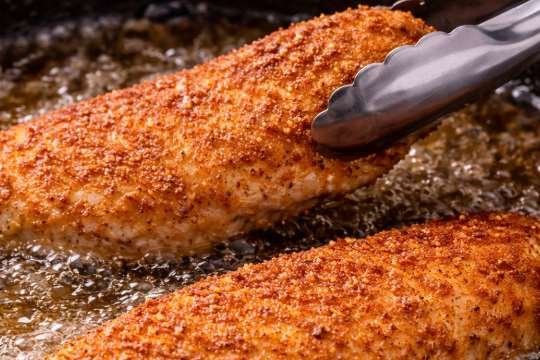
If you’re tired of the same fried breaded cutlet — crispy on the outside, predictable on the inside, served with nothing but a lemon wedge — you are not alone. I was right there with you. Every week, same pan, same crumbs, same result. Good, sure. But never exciting.
So I started pushing it. The first real breakthrough came when I stopped thinking of my cutlet as a cutlet and started treating it like a giant nugget. Same crispy crust, same juicy chicken, but now I’m laying out a spread of dipping sauces and letting everyone at the table go to town. BBQ sauce, honey mustard, sweet and sour, the classics.
But the combinations that actually surprised me? Cranberry sauce (yes, really) and hot pepper jelly. Both of them cut through the richness in a way that felt genuinely new. Malt vinegar or sriracha is honestly good on almost anything fried. I keep both on the table by default now.
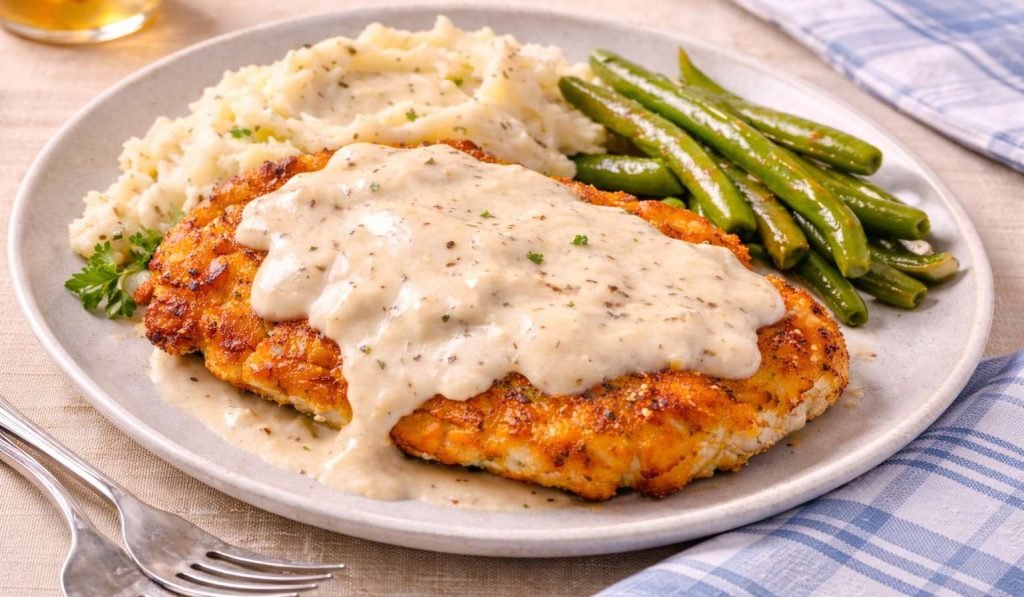
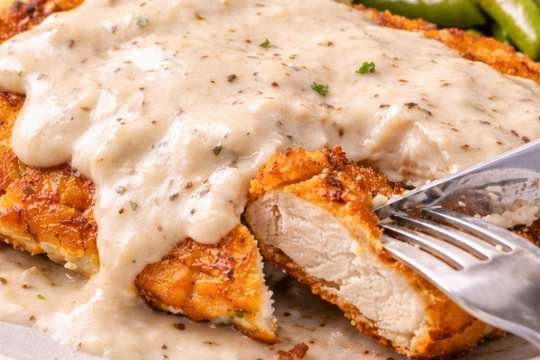
Then there’s the other twist, the one I keep coming back to the most: Midwestern-style pan gravy. Also called cream gravy. You use the drippings left in the skillet after frying, build a quick roux with butter and flour, and pour in warm milk until you get a thick, pepper-heavy gravy that blankets the whole cutlet. It’s old-school, it’s humble, and it tastes like something a neighbor would bring to a potluck and never share the recipe for. I make it at least twice a month now.
Below, I’ll walk you through the base cutlet method, both serving directions (nugget board and cream gravy), and every variation worth trying. Let’s get into it.
The Giant Nugget Sauce Lineup
Skip the gravy, cut the cutlet into strips, and set out a spread. This is the move for casual nights. Here’s every sauce worth putting on the table:
- BBQ sauce
- Honey mustard
- Sweet & sour
- Cranberry sauce
- Hot pepper jelly
- Malt vinegar
- Sriracha Ranch
The cranberry sauce and hot pepper jelly will raise eyebrows — until the first bite. Both cut through the richness in a way that feels completely intentional once you try it.
Tips For Success
- Pound it to an even thickness. This is the single most impactful step. Uneven chicken means the thin parts overcook before the thick end is done. Plastic wrap over the breast, rolling pin or meat mallet, and take your time.
- Season every single layer. Flour, egg wash, and breadcrumbs all need salt. Seasoning only the surface is a trap — you’ll get a crust that tastes flat, no matter what goes on top.
- Press the breadcrumbs in. Don’t just roll and hope. Use your hands to firmly press the crumbs onto every surface — this is what keeps the crust from sliding off in the pan.
- Get the oil hot enough before the chicken goes in. Test with a water flick — immediate sizzle means you’re ready. Too cool, and you get a greasy, floppy crust. Too hot, and it burns before the chicken cooks through.
- Rest on a rack, not paper towels. Paper traps steam under the cutlet and softens the bottom crust within minutes. A wire rack keeps air circulating and the crust crispy all the way around.
- Warm your milk before adding it to the roux. Cold milk into a hot roux almost always makes lumpy gravy. A quick 45 seconds in the microwave is all it takes to prevent this.
- Don’t be shy with black pepper in the gravy. Cream gravy without a generous amount of black pepper is flat and one-dimensional. It needs the heat to balance the richness of the milk and butter.
The cutlet doesn’t need to be reinvented; it just needs to be a little more interesting. Try the cream gravy first if you want something warm and comforting. Go the nugget route if you want dinner to feel fun. And put the malt vinegar on the table regardless. You’ll thank me later.