
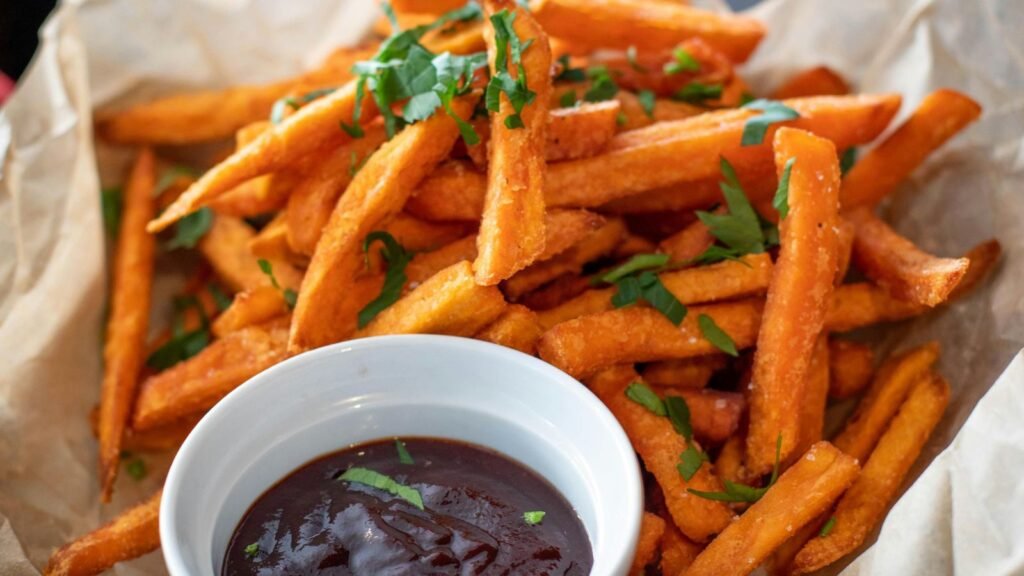
Baked Butternut Squash Fries

We’ll send it straight to your inbox, along with weekly dinner inspiration!

Do you know one of the biggest hacks for volume eaters during a calorie deficit? It is squash. This humble vegetable is one of the most effective tools in the kitchen for anyone who wants to eat generous portions without blowing their calorie budget. A cup of butternut squash weighs in at around 60 calories. A cup of potato fries sits closer to 300. That difference is the entire point.

These baked butternut squash fries will keep your cravings under control, your glucose levels steadier than a regular fry run, and your stomach actually satisfied between meals. They come out golden at the edges, tender in the middle. The natural sweetness of the squash caramelizes beautifully in a hot oven, producing that slightly sticky, slightly smoky bite that makes you reach for another.

The Volume Eating Secret

Why Squash Is the Calorie Deficit Hack You Need

Volume eating means you eat foods that take up a lot of physical space in your stomach relative to their calorie count. This keeps hunger at bay without requiring you to white-knuckle your way through the afternoon on a tiny portion. Butternut squash is one of the best foods on earth for this purpose.

It is high in water content, which adds physical volume. It is high in fiber, which slows digestion and keeps you feeling full longer. It is rich in Vitamin A, Vitamin C, calcium, magnesium, and Vitamin B6. And critically, it has a low glycaemic impact compared to potatoes or white rice, which means it raises blood glucose more gradually and avoids the spike-and-crash cycle that sends you back to the kitchen an hour after eating.

Served in fry form, it is also genuinely fun to eat. There is something about finger food that satisfies a craving differently than a bowl of the same ingredient. These fries scratch that itch, the same crunch, the same salty warmth, the same reaching-into-the-bowl energy while keeping the calorie count low.
Dipping Sauces & Serving Ideas

These fries are good enough to eat plain with just a pinch of flaky salt, but a dipping sauce takes them from a side dish to a proper snack. Here are the combinations that work best:

  • Garlic yogurt sauce or tzatziki
  • Sriracha mayo or Chipotle aioli
  • Spiced tomato ketchup
  • Smashed avocado with lemon
  • Herbed Greek yogurt with dill and garlic
  • Honey mustard

Nutritional Breakdown (Per Serving)

Butternut squash fries are a low-calorie, high-volume alternative to traditional fries.

  • Calories: ~120–150 per serving
  • Fiber: High (supports fullness and digestion)
  • Vitamin A: Over 100% daily value
  • Fat: Low unless oil is heavily added
  • Carbs: Complex carbs with slower digestion than potatoes

Compared to regular fries, which can exceed 300–400 calories per serving, this version delivers similar satisfaction with significantly fewer calories. And if you want more volume eating hack, you can also make this savory and sweet spaghetti squash recipe.

Baked Butternut Squash Fries

standalone snack between meals, which is exactly the point. A generous portion is filling, genuinely satisfying, and low enough in calories to fit into a deficit without any mental arithmetic.

PREP

15 mins

COOK

35 mins

TOTAL

50 mins

SERVINGS

4

INGREDIENTS

1 large butternut squash (about 900g / 2 lbs), peeled and seeded
1 tbsp cornstarch (arrowroot powder works as a paleo substitute)
2 tbsp of olive oil or avocado oil
1 tsp smoked paprika
1 tsp of garlic powder
½ tsp of onion powder
½ tsp ground cumin (optional but recommended)
Sea salt and freshly ground black pepper to taste
Chopped fresh parsley to taste
You can also add red chili flakes, if you like extra heat.

INSTRUCTIONS

NOTES

A light coating of cornstarch before the oil goes on is what separates genuinely crispy baked fries from soft, steamed ones. The starch forms a thin crust on the outside of each fry that crisps up in the oven’s heat. Pat the squash completely dry first, then toss in cornstarch, shake off any excess so only a very thin coating remains, and then add the oil and seasoning. Skipping this step will still produce a good fry but not a great one.

Tips & Variations

Set your oven to 425°F (220°C). Place your rimmed baking sheet inside the oven while it preheats. A hot pan means the fries start crisping the moment they touch the surface, rather than sitting in a cold pan slowly warming up. Line with parchment paper after preheating, or lightly spray with oil.
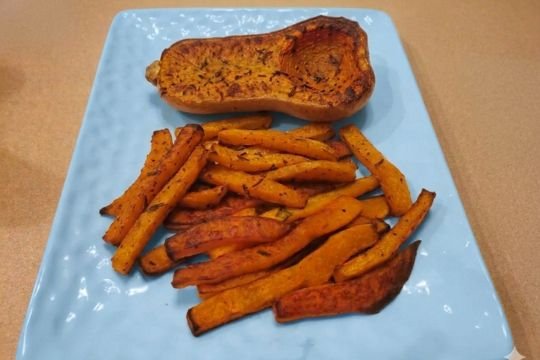
Cut the top and bottom off the squash to create flat, stable ends. Use a sharp vegetable peeler or paring knife to remove the skin completely. Cut the squash in half lengthwise and scoop out the seeds with a spoon. Focus on the straight neck of the squash for the most uniform fry shapes. Slice it into planks about 1 cm thick, then cut those planks into fry-shaped sticks. Keep them as even as possible so they cook at the same rate. Save the bulbous end for soup, risotto, or another recipe.
Pat the squash sticks thoroughly dry with a clean kitchen towel or paper towels. Any surface moisture will steam the fries rather than roast them. Place the dried fries in a mixing bowl, sprinkle over the cornstarch, and toss well until evenly coated. Transfer to a colander and shake firmly to remove any excess cornstarch. You want a thin, even coating, not a thick dusting.
Return the coated fries to the mixing bowl. Drizzle over the olive oil and add the smoked paprika, garlic powder, onion powder, cumin, salt, and pepper. Use your hands to toss everything together until each fry is evenly coated. This is worth doing properly — even seasoning means every bite is consistent, not patchy.
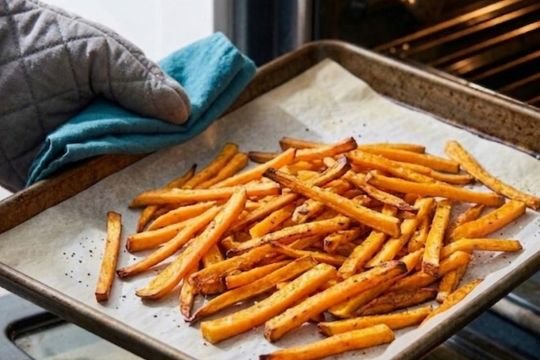
Carefully remove the hot baking sheet from the oven and arrange the fries in a single layer with space between each one. This step is critical: if the fries are touching or piled on top of each other, they will steam rather than roast and come out soft. Use two baking sheets if needed. Reduce the oven temperature to 425°F if you started higher, and bake for 15 minutes.
After 15 minutes, flip each fry carefully with a spatula and return the trays to the oven. Bake for a further 15 to 20 minutes until the edges are deeply golden and the surface looks dry and caramelized. The fries will also crisp further as they cool — allow them to rest on the tray for 5 to 10 minutes before serving. Scatter with fresh parsley and a pinch of sea salt straight from the oven.
Do not crowd the pan. If the fries are touching, they steam instead of roasting, and you lose the crunch entirely. A little extra space on the tray makes an enormous difference to the final texture.
No cornstarch? Arrowroot powder produces an almost identical result and is the better choice if you follow a paleo diet. Plain flour works in a pinch, though the fries will be slightly less crisp. If you want to skip the coating altogether, the fries will still be good, just not quite as crispy.
Butternut squash is the most widely available and easiest to work with, but other varieties are worth trying once you are comfortable with the method. Delicata squash is smaller, has edible skin, and requires no peeling; simply slice into rounds or half-moons and roast. Kabocha squash produces a denser, richer fry with a slightly nuttier flavor. Acorn squash works well cut into thin wedges rather than matchsticks.
For the oil, avocado oil has a higher smoke point than olive oil and produces a slightly crispier result at high heat. Either works well here. A cooking spray applied directly to the top of the fries on the hot tray before they go in is another effective method for keeping the calorie count lower.
As a side dish, these fries pair naturally with grilled chicken, baked fish, lean turkey burgers, or a simple egg-based dish. They also work as a Store leftover fries in an airtight container in the fridge for up to 3 days. To restore crispiness, reheat in the oven at 350°F (175°C) for 5 to 8 minutes, or in a toaster oven, or briefly in the air fryer. Avoid the microwave — it will make them soft and limp. Leftover fries also chop beautifully into salads, grain bowls, or a veggie-loaded frittata the next morning.