
Spaghetti squash has a reputation problem. For years, it has been marketed almost exclusively as a pasta substitute that everyone is supposed to pretend tastes the same. It does not taste the same; it doesn’t need to.
Spaghetti squash is mild, slightly sweet, and has a delicate flavor that absorbs whatever you put around it. Roasted properly, it develops caramelized edges and a gentle nuttiness that no amount of steaming or microwaving can replicate. It is naturally low in carbohydrates, genuinely filling, and works at any meal.
This recipe covers everything you need to know, the right way to roast it so it comes out tender rather than waterlogged, and then five genuinely different ways to serve it. Some are quick and simple. One is rich and indulgent. One is sweet enough to serve alongside pork. All of them are worth making.

Before You Cook
The One Mistake That Ruins Spaghetti Squash
Most people overcook it or cook it with too much moisture, and the result is waterlogged, mushy strands that fall apart and taste of nothing in particular.
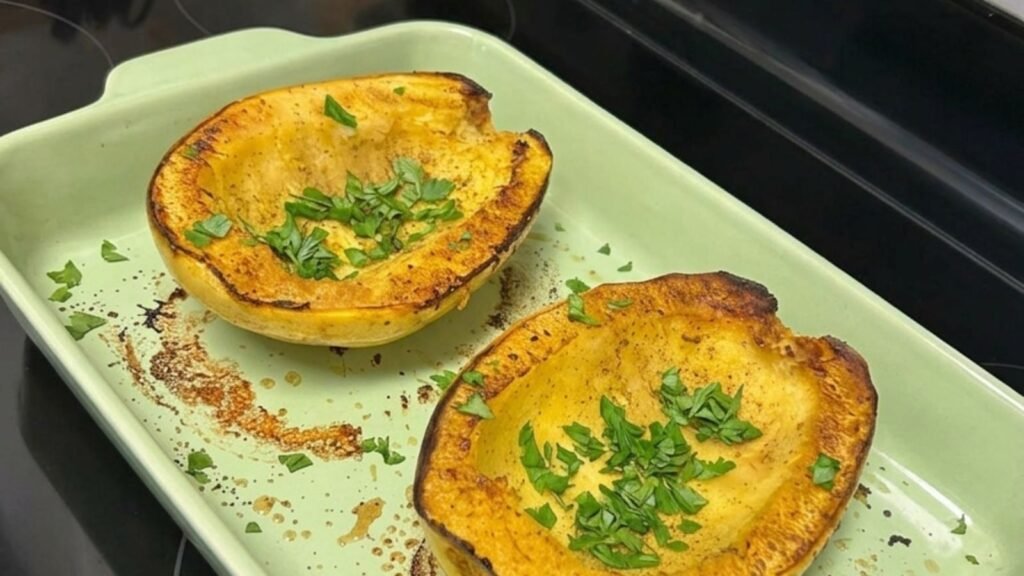
The fix is to roast it cut-side down in a hot oven without any added water. The direct contact with the hot baking sheet draws moisture out of the flesh rather than trapping it in, which concentrates the flavor and gives the strands a firmer, more satisfying texture.
Aim for al dente — tender but still with a little bite — rather than making it so soft that it falls apart. Check it at the 20-minute mark and pull it early if you are getting close.
There is also the matter of salting. Do not salt the flesh before it goes into the oven. Salt draws moisture out of vegetables, which is useful in many situations, but actively counterproductive here, where you’re trying to keep the strands as dry as possible.
Season after roasting, once the strands are out of the shell and in the bowl.
Three Ways to Serve It
Spaghetti Squash Recipes Worth Making
Each of the following recipes uses the roasted strands from the recipe card below as its starting point. They range from a simple five-minute side to a fully stuffed dinner that needs nothing alongside it.
Brown Butter, Garlic & Parmesan
You’ll need: Butter, garlic, Parmesan, nutmeg, and fresh parsley.
This is the version you make when you want something quick, elegant, and genuinely delicious with minimal effort.
Melt two tablespoons of butter in a wide pan over medium heat and let it foam and turn golden-brown. Watch it carefully, it goes from brown to burn quickly.
Add two minced garlic cloves and cook for 30 seconds, then add the spaghetti squash strands and toss to coat everything in the nutty, garlicky butter.
Season generously with salt, a pinch of black pepper, and a little freshly grated nutmeg. Serve in warmed bowls with a heavy hand of freshly grated Parmesan and a handful of fresh flat-leaf parsley. This takes ten minutes and tastes like something from a restaurant.
Stuffed Squash Boats with Slow-Cooked Ragu
You’ll need: Ground beef or lamb, onion, garlic, crushed tomatoes, red wine, and mozzarella.
This is the dinner-table showstopper. Instead of removing the strands from the shell, leave them in place and use the roasted squash half as the serving vessel.
Make a simple slow-cooked meat ragu on the stovetop: brown ground beef or lamb with onion, garlic, and a pinch of chilli, add crushed tomatoes and a splash of red wine, and simmer for 30 to 40 minutes until thick and deeply flavored.
Spoon the ragu generously into each squash half over the strands, top with grated mozzarella or Parmesan, and return to the oven at 375°F for 10 to 15 minutes until the cheese is bubbling and golden. Bring the squash halves straight to the table and let people serve themselves.
Cheesy Baked Gratin
You’ll need: Butter, plain flour, whole milk, sharp cheddar or Gruyere, nutmeg, and breadcrumbs.
For the version that makes no apologies for being indulgent, make a quick Mornay sauce: melt two tablespoons of butter, whisk in two tablespoons of flour, then gradually add 300ml of warm milk, stirring constantly until smooth and thickened.
Remove from the heat, stir in a generous handful of grated sharp cheddar or Gruyere, and season with salt, pepper, and a good grating of fresh nutmeg.
Fold in the spaghetti squash strands and transfer to a baking dish. Top with more grated cheese and breadcrumbs, then grill under the broiler for 4 to 5 minutes until golden and bubbling across the top. It sits somewhere between a gratin and a mac and cheese, and it is exactly as good as that sounds.
Now, let’s get to the base of these recipes. Here is how you can make the foundation of the spaghetti squash.